
How Congregationalism
Relates to
the
Heresy of
Decisional Regeneration
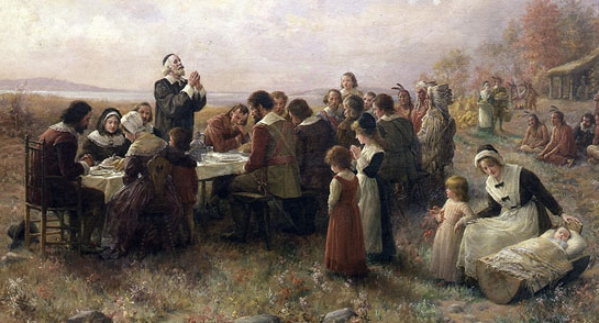 |
Congregationalism was the form of government used by the Puritans in which each member had a vote. The Puritan churches were called Congregational Churches. Because they were Puritan, they practiced a Reformed Christianity (Calvinist) with congregational government. Each congregation independently and autonomously ran its own affairs. These principles are enshrined in the Cambridge Platform (1648) confession of faith. In England, since they dissented from the Anglican State Church, they were called Separatists or Independents to distinguish them from Reformed Presbyterians, whose churches practiced a government by elders. The "New England Way" began with the New England Puritan view of Christian salvation as being a supernatural change of heart and the indwelling of the Holy Spirit. These two doctrines were the cornerstone of their "experiential" Calvinist theology, emphasizing that true faith could not be produced by human will power or mere religious ritual, but required an immediate, supernatural. sovereign act of God. The Puritans rejected the idea of baptismal regeneration (that water baptism saves a person) and instead taught that human nature is entirely corrupted by sin. Because a person is spiritually "dead," salvation requires a supernatural, monergistic act of the Holy Spirit. According to main doctrinal guide for Puritans, the Westminster Confession, The new creature in Christ (2 Corinthians 5:17), is made by regeneration by God’s powerful work of taking away a "heart of stone" and giving a "heart of flesh," spiritually transforming the human will so the saint can freely choose faith and repentance For New England Puritans, the Holy Spirit was not just a theological concept, but an active, personal, immediate presence inside the believer. This idea has been entirely lostto the many denominations perverted by the Scottish Common Sense Realism "verbal restrictive" theory of the Holy Spirit. Puritans believed in the mystical union of God and the saint (1 Corinthians 6:17). This takes place at supernatuiral regeneration, when the Holy Spirit inhabits the saint, and the saint becomes one spirit with God. |
 |