How Calling people to Immediate Repentance does not have to Result in False Conversions and the Heresy of Decisional Regeneration
 |
Despite much personal affection and a shared Evangelical vision, Wesley and Whitefield stopped working together because of their doctrinal differences. Both called sinners to immediate repentance, even while thinking the other dishonored God with his view of election. We will never know what great things might have accomplished if they had worked together as they did when they were students in the Holy Club at Oxford.
|
 |
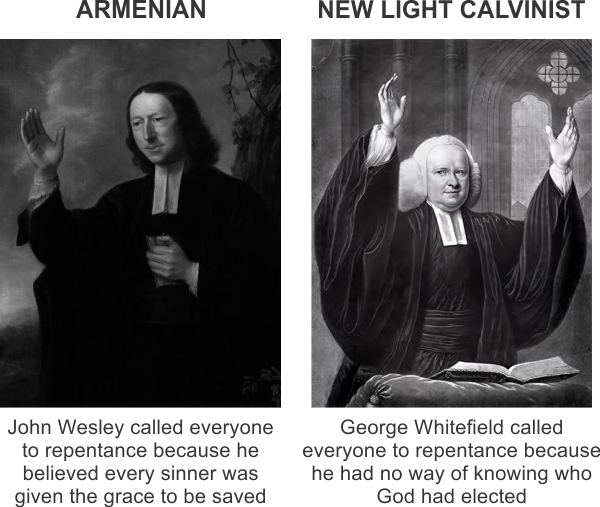 |
It doesn't matter if you're Arminian or Calvinist or Restorationist...you can prevent false conversions. The problem isn't telling people to immediately repent...the problem is telling people they're saved because of something they've done and not examining them for Biblical evidence of supernatural regeneration and the indwelling of the Holy Spirit.
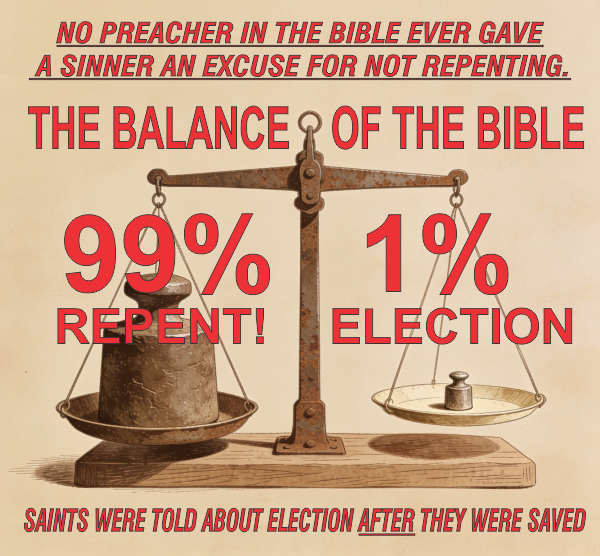 |
Even though every preacher in the Bible didn't hesitate telling sinners to immediately repent, this didn't authorize them to tell them they were saved! Not all faith is saving faith and not all repentance is saving repentance. The same New Testament ministers who told sinners to REPENT!, also warned them that if they didn't bear fruit, they were not saved. Christian Ministers before the 20th century never presumed to tell people what they had no way of knowing. Ministers would only say "hopefully saved" with the full knowledge that time would tell.
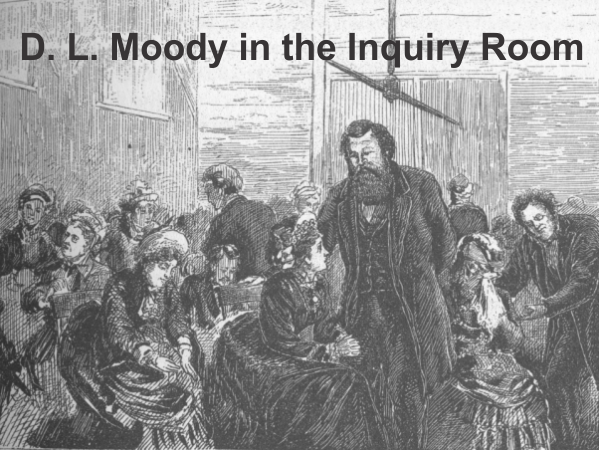
In the inquiry Room or during an after-meeting or counselling one-on-one in homes, ministers would examine penitents for evidence of the supernatural change of character that takes place with regeneration and the indwelling of the Holy Spirit. In the process of examination, penitents would find out if they had Biblical evidence of salvation.
Christ warned, "every good tree bears good fruit, but a bad tree bears bad fruit. A good tree cannot bear bad fruit, nor can a bad tree bear good fruit", and "He who abides in Me, and I in him, bears much fruit" (John 15:5), and "not everyone who says to Me, ‘Lord, Lord,’ shall enter the kingdom of heaven, but he who does the will of My Father in heaven" (Matthew 7:17 and 7:21). John the baptist warned, "bear fruits worthy of repentance" (Luke 3:8). The Greek word translated "worthy" is axios, which is where we get the word axiom, which means self-evident proof. Other places the Greek word is used: "He who loves father or mother more than Me is not worthy of Me" (Matthew 10:37), "repent, turn to God, and do works befitting repentance" (Acts 26:20).
The Apostle Paul warned, "Examine yourselves as to whether you are in the faith. Test yourselves. Do you not know yourselves, that Jesus Christ is in you?—unless indeed you are disqualified" (2 Corinthians 13:5),and "walk worthy of the Lord, fully pleasing Him, being fruitful in every good work (Colossians 1:10), and "we are His workmanship, created in Christ Jesus for good works, which God prepared beforehand that we should walk in them" (Ephesians 2:10), and " that He might redeem us from every lawless deed and purify for Himself His own special people, zealous for good works" (Titus 2:14), and "He saved us, through the washing of regeneration and renewing of the Holy Spirit ... those who have believed in God should be careful to maintain good works" (Titus 3:5-8).
The Apostle John warned, "in this the children of God and the children of the devil are manifest: Whoever does not practice righteousness is not of God" (1 John 3:10), and "now by this we know that we know Him, if we keep His commandments. He who says, 'I know Him,' and does not keep His commandments, is a liar, and the truth is not in him. But whoever keeps His word, truly the love of God is perfected in him. By this we know that we are in Him. He who says he abides in Him ought himself also to walk just as He walked" (1 John 2:3-6).
The Apostle Peter warned, "Be even more diligent to make your call and election sure" (2 Peter 1:10).
The theological tension between an overwhelming number of "REPENT!" commands in Scripture and the foundational passages on the sovereignty of God lies at the very heart of the debate over Decisional Regeneration. If only Arminian ministers would examine penitents for evidence of regeneration and the indwelling of the Holy Spirit, and establish probation periods for penitents the way they did in the 1800's, the number of false converts would be few.
Most Evangelical ministers in America actively promote decisional regeneration. They do this by having sinners repeat a prayer and then by telling them if they sincerely repeated the prayer, they are born again. It's no better for Restorationists...the only difference is Restorationist ministers tell sinners, if they voluntarily get baptized in water, they are saved.