
How the Downgrade of Theology
Relates to
the
Heresy of
Decisional Regeneration
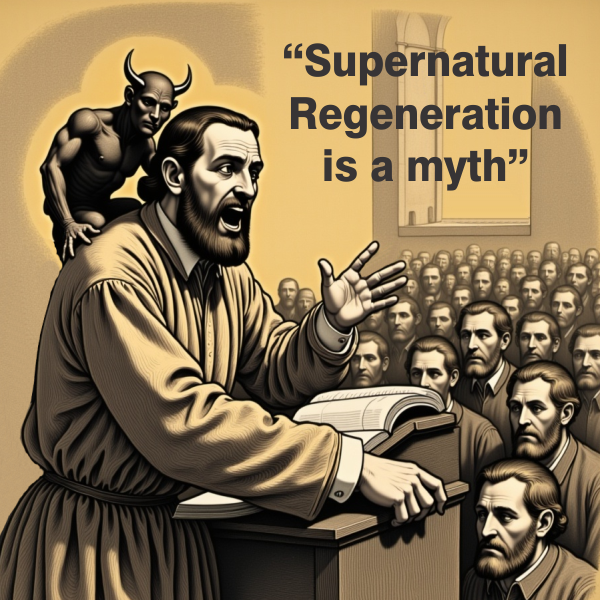 |
Charles Spurgeon ( 1834-1892) was an enthusiastic member of the Baptist Union until he saw a decline of salvation theology in the members which has been labelled the "Downgrade Controversy". He tried to get members to relent and return to orthodoxy, but they claimed the new theology was just a new way of explaining the old religion. But Spurgeon believed they were teaching an entirely different religion. He wrote, "A new religion has been initiated, which is no more Christianity than chalk is cheese; and this religion, being destitute of moral honesty, palms itself off as the old faith with slight improvements, and on this plea usurps pulpits which were erected for gospel preaching. The Atonement is scouted (dismissed), the inspiration of Scripture is derided, the Holy Spirit is degraded into an influence, the punishment of sin is turned into fiction, and the resurrection into a myth, and yet these enemies of our faith expect us to call them brethren, and maintain a confederacy with them!". "The Holy Spirit is degraded into an influence" is likely a reference to the "truth impression" theory of Scottish Common Sense Realism in which the Holy Spirit is limited by the "verbal restrictive" theory. On October 1887, Spurgeon resigned from the Baptist Union, and he would soon also resign from the London Baptist Association and all other associations that had no clear Evangelical statement of faith. For this, Spurgeon would be publicly rebuked by the Baptist Union, and many of his friends would turn on him. Here are some aspects of the Downgrade: Denial of Biblical Authority and reliability: Ministers questioned the inspiration and truthfulness of Scripture. Denial of the atonement of Christ: Ministers no longer taught the sacrifice of Christ as paying the penalty for sin. Denial of an eternal Hell: Ministers taught alternative theories to eternal punishment. Denial of the Doctrine of saving grace as distinct from common grace: Ministers no longer taught regeneration as a supernatural act of God with the indwelling of the Holy Spirit. Denial of the Evangelistic gospel: Sermons became focused on humanistic reasons for the coming of Christ wth an emphasis on a social gospel. "Spurgeon summed up the Downgrade this way: “We cannot hold the inspiration of the Word, and yet reject it; we cannot believe in the atonement and deny it;… we cannot recognize the punishment of the impenitent and yet indulge the ‘larger hope.’ One way or the other we must go. Decision is the virtue of the hour". This is what Charles Spurgeon taught about salvation: "All that the believer has must come from Christ, but it comes solely through the channel of the Spirit of grace. Moreover, as all blessings thus flow to you through the Holy Spirit, so also no good thing can come out of you in holy thought, devout worship, or gracious act, apart from the sanctifying operation of the same Spirit". "Even if the good seed be sown in you, yet it lies dormant except He worketh in you to will and to do of His own good pleasure. Do you desire to speak for Jesus—how can you unless the Holy Ghost touch your tongue? Do you desire to pray? Alas! what dull work it is unless the Spirit maketh intercession for you! Do you desire to subdue sin? Would you be holy? Would you imitate your Master? Do you desire to rise to superlative heights of spirituality? Are you wanting to be made like the angels of God, full of zeal and ardour for the Master's cause? You cannot without the Spirit—"Without me ye can do nothing." "O branch of the vine, thou canst have no fruit without the sap! O child of God, thou hast no life within thee apart from the life which God gives thee through His Spirit! Then let us not grieve Him or provoke Him to anger by our sin. Let us not quench Him in one of His faintest motions in our soul; let us foster every suggestion, and be ready to obey every prompting". "If the Holy Spirit be indeed so mighty, let us attempt nothing without Him; let us begin no project, and carry on no enterprise, and conclude no transaction, without imploring His blessing. Let us do Him the due homage of feeling our entire weakness apart from Him, and then depending alone upon Him, having this for our prayer, 'Open Thou my heart and my whole being to Thine incoming, and uphold me with Thy free Spirit when I shall have received that Spirit in my inward parts'"
|
 |