
How the term
"Evangelical"
Relates to
the
Heresy of
Decisional Regeneration
 |
 |
 |
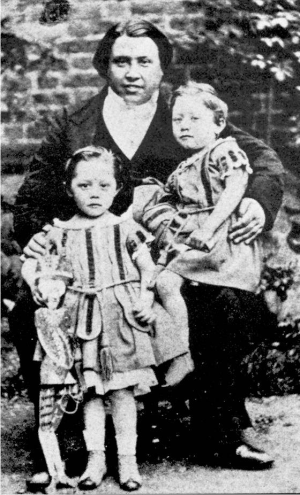
Charles Spurgeon is show with his twin boys,
Charles and Thomas.
|
Evangelical: Someone who has a conscious, personal "born-again" experience of conversion and commitment to Jesus Christ. Evangelical Minister: A minister who calls sinners to saving repentance and saving belief in the Lord Jesus Christ. Evangelical ministers like George Whitefield and John Wesley were locked out Anglican churches (the denomination in which they were ordained) for telling parishioners that they could obey their pastors and still go to hell if they weren't supernaturally changed by regeneration and indwelling of the Holy Spirit. Since the First Great Awakening, the salvation theology of Calvinist and Arminian ministers has evolved away from the idea that the Holy Spirit immediately regenerates and fills with the Holy Spirit. Charles Spurgeon was an enthusiastic member of the Baptist Union until he saw a decline of salvation theology in the members which has been labelled the "Downgrade Controversy". He tried to get members to relent and return to orthodoxy, but they claimed the new theology was just a new way of explaining the old religion. For many members, the term "Evangelical" had ceased to include the belief in supernatural regeneration and the indwelling of the Holy Spirit. Spurgeon believed they were teaching an entirely different religion. He wrote, "A new religion has been initiated, which is no more Christianity than chalk is cheese; and this religion, being destitute of moral honesty, palms itself off as the old faith with slight improvements, and on this plea usurps pulpits which were erected for gospel preaching. The Atonement is scouted (dismissed), the inspiration of Scripture is derided, the Holy Spirit is degraded into an influence, the punishment of sin is turned into fiction, and the resurrection into a myth, and yet these enemies of our faith expect us to call them brethren, and maintain a confederacy with them!". "The Holy Spirit is degraded into an influence" is likely a reference to the "truth impression" theory of Scottish Common Sense Realism in which the Holy Spirit is limited by the "verbal restrictive" theory. On October 1887, Spurgeon resigned from the Baptist Union, and he would soon also resign from the London Baptist Association and all other associations that had no clear Evangelical statement of faith. For this, Spurgeon would be publicly rebuked by the Baptist Union, and many of his friends would turn on him. Today, in th 21st century, many ministers call themselves "Evangelical", even though they don't believe the Holy Spirit acts immediately on sinners to make them saints. George Whitefield and John Wesley would say these ministers are deceived.. |
 |