
How Francis Asbury
Relates to the
Heresy of Decisional Regeneration
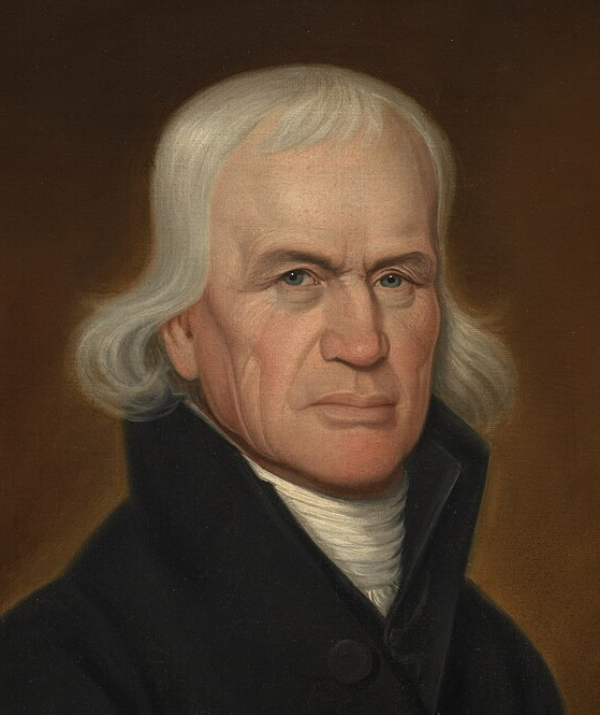
Francis Asbury (1745-1816)
How Francis Asbury
Francis Asbury (1745-1816) |
|
In 1771, Francis Asbury volunteered as a Methodist missionary to the British colonies in America. When the Revolutionary War started, because Methodism was part of the Anglican (Episcopal) Church, he told congregations to remain neutral in what was a brother-against-brother, civil war. After the war, Methodist congregations grew rapidly. When George Washington had been president of the United States for a year, Asbury sent him a letter wishing him future success. Washington wrote Asbury a reply, in which he pledged to "always strive to prove a faithful and impartial patron of genuine vital religion". This was a late eighteenth century way of saying he would support Christians that believed the born again experience as necessary for salvation. Asbury was ordained bishop in 1784. During the First Great Awakening, he encouraged Methodist ministers like Peter Cartwright to participate in Presbyterian Sacramental Meetings. Methodist George Whitefield, had participated in the big one at Cumbuslang, Scotland, and Asbury saw their potential in America. In 1802, he wrote in his journal, "I attended a camp-meeting which continued to be held four days: there may have been fifteen hundred souls present". In 1803 he wrote, "Our camp-meeting begins today ... On Saturday I preached to about one thousand hearers; my text was Isaiah 4:12...there might be in the two congregations nearly four thousand people: there was a visible impression made upon many, and we hope fifty souls were converted to God". In 1804 he wrote, "late camp-meeting upon Town-Creek has given a revival to religion amongst both whites and blacks...We had nearly one thousand souls, to whom I spoke upon Hebrews. 12:25". "In four days they calculate there having been as many hundred converted to God". In 1805 he wrote, "There was great order preserved at Duck-Creek camp-meeting; and that great good was done — three hundred souls were blest!". "The camp-meeting begins to-morrow ...It was judged there were five thousand souls present to hear ; and that one hundred souls were converted to God". "Camp- meetings at Albany, New York; at Lebanon, Vermont in the New-Hampshire districts— all successful...at Duck-Creek camp-meeting five hundred souls; at Accomack camp-meeting four hundred... all these profess to have received converting grace!" In 1806 he wrote, "six thousand souls were on the ground at different times... We had great order and great power from the beginning to the end: I judge two hundred souls were made the subjects of grace in its various operations of conviction, conversion, sanctification, and reclamation. Glory! glory!". "I preached at eleven o'clock to about three thousand souls". "On the Sabbath I preached to about five hundred souls: it was an open season, and a few souls professed converting grace". "Camp-meeting, in Maryland...five hundred and eighty were said to be converted; and one hundred and twenty believers confirmed and sanctified. Lord, let this work be general!". In 1807 he wrote: "It is but too manifest that the success of our labours, more especially at camp-meetings, has roused a spirit of persecution against us — riots, fines, stripes — perhaps prisons and death, if we do not give up our camp-meetings: we shall never abandon them, but shall subdue our enemies by overcoming evil with good". "Possibly we had two thousand souls to hear us...doubtless there were precious souls converted, (report says about thirty,) and sanctified". In 1808 he wrote, "The work of God went on night and day...about two thousand people: forty souls professed converting grace". "I rejoice to think there will be perhaps four or five hundred camp-meetings this year; may this year outdo all former years in the conversion of precious souls to God ! Work, Lord, for thine own honour and glory!" Click here to read more of Francis Asbury's memories of Methodist Camp Meetings Click here to read Peter Cartwright's memories of Methodist Camp Meetings. |
 |
To Contact the Author, click here