How New England Theology
Relates to
the
Heresy of
Decisional Regeneration
|
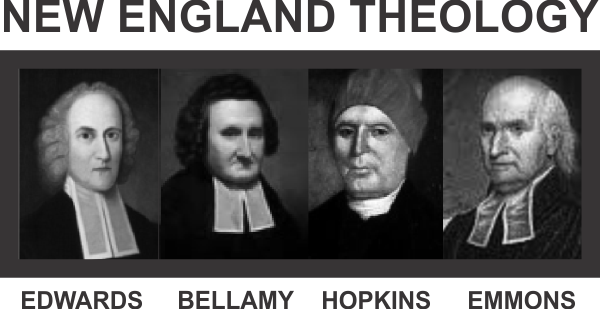
New England Theology was a continuation of the New England Way. The "New England Way" began with the Puritan view of Christian salvation as being a supernatural change of heart and the indwelling of the Holy Spirit. Puritans (later called Congregationalists) taught that regeneration was a supernatural act of God that changed the character of the individual. This belief continued even when the Puritans adopted the "Halfway Measure", also called the "Halfway Covenant" to assure the survival of their church. When they first came to the New World, they agreed that only supernaturally regenerate (born again) individuals should be admitted as full members, which qualified them to be partake of the Lord's Supper, voting rights, and the baptism of their babies. This was, after all, the reason the Pilgrims and Puritans were persecuted by the Church of England. They did not believe salvation was assured if one made a "confession of faith" at the conclusion of Church of England catechism. They also did not believe supernatural regeneration and the indwelling of the Holy Spirit was likely to happen by using the "means of grace" available in the established church. They saw the Church of England as a daughter harlot of the mother harlot Romish church, so they felt called to "come out from among them" (2 Corinthians 6:17). THIS WAS WHY THEY WERE PERSECUTED AS DISSENTERS. But when the first generation of Pilgrims and Puritans who came to America were dying off, many of their childen showed no evidence of regeneration. This was a crisis, because according to their own rules, unregenerate Christians would not be allowed to baptize their children, and if they couldn't baptize their children, they were highly unlikely to continue to support the church. Hence the need of the Halfway Covenant, and the mechanism of Halfway membership, the practice of "Owning The Covenant". If an unregenerate member of the church "Owned the Covenant", they were allowed to baptize their children. Owning the covenant was NOT evidence of supernatural regeneration and the indwelling of the Holy Spirit. It was merely a legal device by which nominal Christian parents would be allowed to baptize their babies. In all this, the necessity of supernatural regeneration and the indwelling of the Holy Spirit was still seen a necessary for one to be considered saved. After the First Great Awakening, Jonathan Edwards and his disciples Bellamy, Hopkins and Emmons adapted the New England salvation theology to include a distinction between the sinner's natural ability and moral inability to choose God over self. Supernatural regeneration and the indwelling of the Holy Spirit was still necessary for the change of disposition from the born again experience, but by arguing that humans have the natural capacity to believe, but lack the moral desire, New England theologians maintain that God remains fully sovereign in salvation while sinners remain completely responsible for their refusal to repent. |
 |