This Diary written by John Lyle contains the first-hand accounts of miracles that took place at Presbyterian Sacramental Meetings held in the Western Frontiers of Kentucky and Tennessee in the year of our Lord, 1805. The Rev. John P. Campbell, having declined the appointment given him to ride two months in the bounds' of the Cumberland Presbytery; on a motion made by Mr. Campbell, the Synod of Kentucky unanimously agreed to appoint me as a missionary to go the above route; I thereupon set out on my journey from Denville, where the Synod sat on Friday, the 18th of Oct. 1805, in the evening. NOTE: Lyle is a Presbyterian minister. Unless otherwise noted, all ministers he deals with, whether Calvinist or Arminian, are Presbyterian ministers. All synods, general assemblies, presbyteries, clerks, etc., are part of the Presbyterian church. Sabbath Oct. 20, 1805 Monday Oct. 21, 1805 I traveled in company with Mr. Dickey from Capt. Mulder's to Mr. Jameson's, about 18 miles southwest of Little Barren River. The wind blew from the southwest and in the evening there fell several showers of cold rain. I felt somewhat disordered with the cold. Tuesday October 22, 1805 NOTE: Experimental religion refers to evangelical salvation: the experience of being born again, that is, supernaturally regeneration and the indwelling of the Holy Spirit. A minister who is not a born again does not know spiritual things, and is therefor unequipped for missionary work (1 Corinthians 2:14). Lyle was born again, and although he was educated in Scottish Common Sense Realism, he fortunately didn't believe in one of its main tenets, the Verbal Restrictive view of the Holy Spirit. I enquired of him whether he would be willing to undertake a mission. He said he intended to itinerant in Louisiana the ensuing winter, or sometime shortly, but would do it at his own expense, that the funds of the General Assembly might be expended on more useful and worthy men. He gave me a brief history of the Cumberland Presbytery from which history I learned that the vacancies are chiefly filled up with illiterate exhorter and licentiates who are chiefly Arminians in sentiment and who ride in circuits after the manner of the Methodists. NOTE: John Lyle thought Presbyterian ministers with Arminian beliefs didn't explain salvation adequately, and therefore, caused more false conversions than Presbyterian ministers with Calvinist beliefs. Presbyterian ministers in remote rural areas of America rode in circuits and held yearly Sacramental Meetings (the Lord's Supper Meetings). The most famous of these meetings took place at Cane Ridge, Kentucky. The Presbyterian Church in America re-wrote the history of the Camp Meetings, claiming they were run by the Methodists, when they were in reality, started as Sacramental Meetings of Presbyterian ministers. The forepart of the day spent in writing to the Stated Clerk of the Synod on business. The rest of the day was chiefly spent in conversation with Mr. Reid and family. Being fatigued with riding - at the request of Mr. Reid, I agreed to preach here tomorrow.
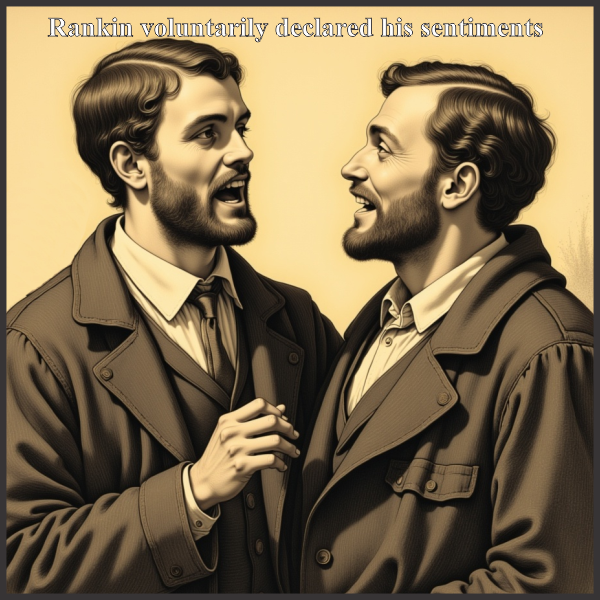
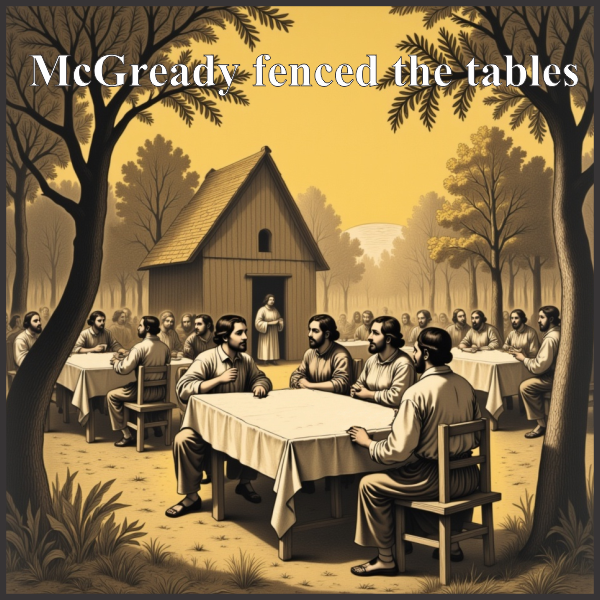
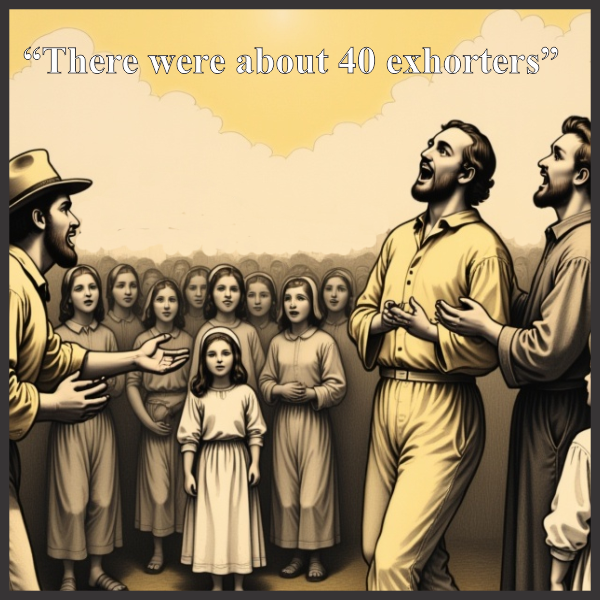
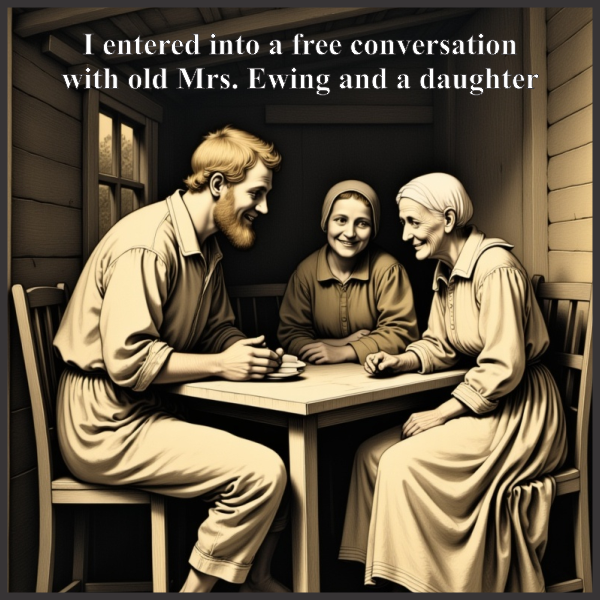
He said that God had given to every man a sufficiency of grace, which if he would improve, he would get more etc. until he would arrive at true conversion or a living faith, etc.. After we had conversed for some time on this subject the doctrines of election & effectual calling were introduced. These he in effect denied. After his mouth was stopped that he appeared to have nothing to say in favor of his tenets. NOTE: Election & effectual calling are Biblical truths also taught by New Light Calvinists, who didn't see this as inconsistent with telling sinners to repent and even, make yourself a new heart. When John Witherspoon took over the College of New Jersey in 1768, the premier American Calvinist salvation theology was that of Jonathan Edwards, Joseph Bellamy, Samuel Hopkins and Nathanael Emmons, but John Lyle was taught Scottish Common Sense Realism, and associated the calling of sinners to immediate repentance with the Arminian belief that all men are given the grace to be saved. Most ministers of the First Great Awakening in America were Calvinists. They had no problem calling sinners to immediate repentance. The minister doesn't know who God has elected, but he does know he's commissioned by God to call sinners to repent. He said when he held the sentiments I had vindicated he was less successful than since he had engaged in preaching those in opposition to them - etc., thus seemed to make his success or main argument in favor of his erroneous opinions - For my part I am far from thinking that success in converting people to error is success in the cause of God. After breakfast I traveled to company with Mr. Rankin 24 miles to Little Muddy meeting house, where a sacrament was appointed, in a kind of vacancy where the circuit riders preached. Two young men spoke who have been lately licensed, the one to exhort- the other to preach. These young men, I am told, have not even studied Eng1ish grammar and appear to be Arminians in principle. In evening I held society at Captain Porter's where about 20 people attended, and most of them seemed very devout. Saturday - An illiterate licentiate named Bell preached - the weather being exceptionally cold & the house being small and open, the people were very uncomfortable as to the external circumstances, and appeared to be generally inattentive. In the evening I spoke briefly on Matthew 5:3. Some of the people appeared very attentive and to hear with satisfaction - one of the Elders observed afterwards that his soul was much fed by the discourse. The same observations were made by some of the lively shouting professors. NOTE: "Professors" are people who profess to be Christian, but don't necessarily exhibit Biblical evidence of experiential religion. Mr. Rankin, being Sick, went home. In the evening I held society at Mr. Hay's who was sick - spoke to an attentive audience on - Many are the afflictions of the Righteous etc. - The people appear attentive. Some were affected and some occasionally shouted, but in general, good order was preserved. Sabbath Preached the action sermon on 1 Corinthians 1:18-25. The people heard with attention even the doctrine of a holy or effectual calling with seeming patience - a doctrine not much preached or believed in these parts. Mr. McGready introduced or fenced the tables lengthily and served the first. NOTE: James McGready (1758-1817) is a key Presbyterian Minister in the Presbyterian Sacramental Meetings where supernatural manifestations take place. To "fence the table" means to explain that only saved people can partake of the Lord's Supper. In actual practice, Presbyterian ministers merely asked people to answer a few questions from the Shorter Catechism. If the answers were correct, they were given a Communion Token to present at the Table.
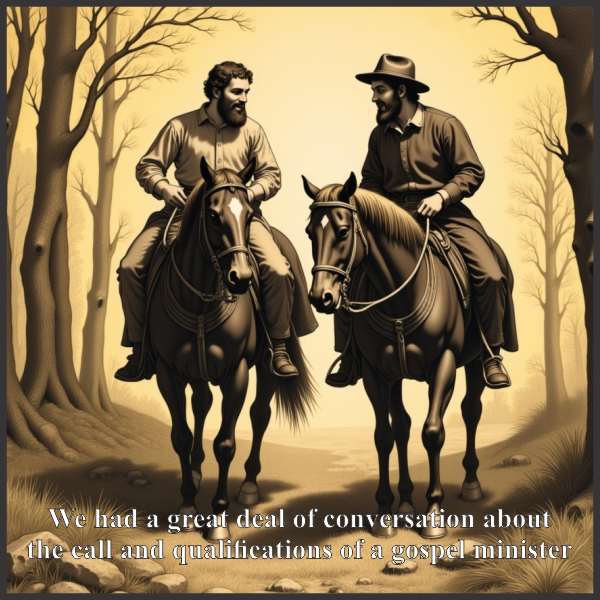
He spoke affectionately. Some of the communicants appeared tenderly affected - some wept and some rejoined; others seem but little engaged. The wicked were in the general to appearance unmoved. I served the second table. The people were then dismissed. Sabbath Evening I was at Society at Captain William Porter's. Mr. McGready preached on "Draw nigh unto me and I will unto you". He seemed to labor with great earnestness - the people appeared devout and attentive; but no unusual stir till dismissed - then a Baptist preacher began to sing loudly, which singing was attended with violent gestures - others joined him - a Baptist negro took the jerks and began to holler or exhort - the Baptist preacher also exhorted awhile. I could hear nothing distinctly - the negro began in a shuffled step which he performed with activity and ease. Sometimes he sang - sometimes prayed - some of the people attempting to sing a tune for him - but Mr. McGready and most of the people stood and looked at the negro dancing, I think half an hour. The negro then stopped a little while - some began to sing (I believe), the tune of a reel or march to a hymn - the negro began to dance in a step by which he beat it exactly. I inquired into the reason of this exercise - I was told by Captain Porter - that the dancing relieved the negro from jerking, etc.. Mr. McGready said sometimes afterwards that we could not account for jerking etc. on any natural principle - that the jerks were designed to answer the end of miracles - in drawing the attention of mankind and convincing infidels of the power of God. Note: It is interesting that Lyle wrote this after witnessing the "jerks" and "slain in the spirit" and many other fantastic manifestations for four years. He never doubted that they were somehow tied to the immediate activity of the Holy Spirit. Lyle was educated in Scottish Common Sense Realism, but he never believed the verbal restrictive theory, and when McGready expressed a "bare faith" view (the logical end of the "truth impression" theory), Lyle saw it as heresy. On June 28, 1804, Barton Stone, Robert Marshal, John Dunlavy, Richard McNemar, John Thompson and David Purviance started the Restorationist movement. The Restorationist view of "bare faith" would eventually extend to water baptism, so everyone who was baptized, regardless of their spiritual condition would be considered automatically saved. In one part of Kentucky, 18 of the 26 Baptist churches were entirely "converted" to the "new improved way" to get saved. Tuesday. Some inquired at me about the order of church assemblies - wanted whether they ought to shout under sermon when happy, etc. I referred them to 1 Corinthians 14 and talked to them till about ten o'clock - then I rode in company with Mr. Hodge to Mr. McGready's - 23 miles. I learned from Mr. McGready and Mr. Hodge that the Methodists had cunningly proselytized some Presbyterian societies in their infancy; and carried away many disciples after them; and that some of their preachers had given offence by preaching falling from grace at sacramental meetings. Note: Methodists preach that a saint can lose his salvation. Calvinists believe if someone is truly saved, the Holy Spirit will help him persevere to the end of his life, hence the doctrine, perseverance of the saints. As McGready professed to esteem our confession highly, except two or three particulars, he seemed a good deal irritated at this conduct of the Methodists. Wednesday I rode in company with Mr. Hodge to Mr. King's in Shiloh - Tennessee (40 miles). We had a great deal of conversation about the call and qualifications of a gospel minister - church. Spent the chief of this day in conversation with pious Mr. King. He told me a great deal about the revival in this country - and especially dwelt on the great numbers that he said were reformed & converted by the instrumentality of illiterate exhorters & preachers. I learned from him and some others that religion is not so lively here as formerly. Human learning is degraded here. Likewise up on Stone River at Big Spring in Mr. King's congregation religion seems to decline, but even lately under serious impression, etc. But it said several joined communion at a sacramental meeting this fall. Friday Preached at Shiloh on Ephesians 2:10. people attentive. Mr. William Hodge has supplied here about four years. He is now absent in Carolina. The people of this congregation were principally gone to a sacramental meeting at Beech church in William McGee's bounds; as it rained about 11 and 12 o'clock there were but few people out - they were mostly of a party who were not agreed that Mr. Hodge should be their minister, because the Methodists were permitted to join in communion, etc.. These people were called opposers of revival. I was certainly informed that the Elders and a number of the people of this congregation collected a circular letter published by the Synod of Kentucky with other pamphlets which were for sale in these parts, and burned them; and that Mr. Hodge highly approved their conduct. Saturday I went to the Beech Meeting House. There I heard a sermon delivered by a Mr. Nelson who has been lately licensed by the Cumberland Presbytery and is said to be a man of learning. There is nothing very remarkable in his discourse except his pressing exhortation to the people to pray out - shout, dance and so on in the time of divine worship. He told the people to shout - pray aloud or do whatever duty they felt an impression to do. Said he, "I believe it will not offend God and I am sure (although I was speaking) it will not offend me." The people were roused to action - shouted and prayed aloud exhorted and jerked till nearly the setting of sun. The people camped in wagons and tents around the stand. I retired to the Reverend William McGee's. The people who lodge hear appear engaged in singing, conversation, leaping and shouting - they appear much like a drinking party when heard from the other room; but when I draw neigh, I find their language and rejoicings are of a religious kind. Sunday November 3, 1805 Sabbath November 3, 1805 Preached on 1 Corinthians 13:13, last clause. The audience was large, very attentive and solemnity seemed to rein in almost every countenance, especially during the application. I heard that an infidel being convicted - exclaiming saying, where did that man come from: fell on his knees and cried for mercy. Mr. McKindre, a Methodist Elder, preached after me; and then the ordinance was administered to a large number of communicants, many of whom appeared deeply affected; some shouted - some wept - some leapt, and some danced and jerked and danced a long time after they arose from table. After the tables were served the people were dismissed. Note: Methodists and Presbyterians both held Sacramental Meetings in the British Isles. Presbyterians belonged to the state church of Scotland and Methodists belonged to the state church of England. They held almost identical views of Communion and water baptism, so it was much more reasonable for Methodists to fellowship in the Presbyterians Sacramental Meetings than the various Baptist denominations. There was one difference between the Anglican Methodist and Presbyterians custom of serving Communion. The Presbyterians served Communion to people sitting down while Anglican Methodists served Communion to people kneeling. As you will see in the descriptions, these meetings were run by Presbyterian ministers, not Methodist ministers. Because the Presbyterian view of salvation at this time did not require the immediate activity of the Holy Spirit, the miracles were considered a distraction at best, and possibly, of Satanic origin. The miracles were an embarassment, and the Presbyterians re-wrote history, denying these, and the miracles of the First Great Awakening, calling them the manifestations of "natural motives". They blamed the Methodists, completely ignoring their own rich history of miracles at Presbyterian Sacramental Meetings in Scotland, like the one in 1742 in Cumbuslang. I retired to Mr. McGee's with whom I conversed about the conduct of the Cumberland Presbytery in licensing young men who were illiterate and tainted with Arminianism. He seemed to vindicate their conduct. Note: At this point in the journal was written, "(here write the piece on Stones)", perhaps referring to Barton Stone. I attended in the camp, heard one of two speakers - saw several dance, holler, etc. After exhorting in the evening I rode to Colonel William Trig's. I Suppose there were about 40 exhorters and preachers at this camp meeting. Note: An exhorter is a layman who exhorts sinners to repent and saints to praise God, by the inspiration of the Holy Spirit. Many children did this spontaneously. Tuesday In the morning I engaged a religious conversation with Colonel Trig's family on the doctrine of grace which he did not seem to understand clearly. I also conversed with the old lady and a married son who lives with his father. About 11 o'clock I set out toward the Reverend Craigheads meeting house to an attentive audience on proverbs 11:9. The evening I spent in conversation on the doctrines of religion and hearing the Reverend Craighead exhibit his system of divinity which appears to me to resemble that of Pelagius - he sets it forth in a masterly manner and seems to believe it cordially. Note: "cordially" means "from the heart". In theology, "from the heart" means "from a regenerate heart" since only a regenerate person can believe from the heart. "Head" belief would mean "rational belief" without an unchanged heart. Thursday Having caught a cold and having been taken some medicine, I tarried all day at Mr. Craighead's which I spent in reading the Scriptures and in conversations. Friday I learned from Craighead that his elders had all left him; and most of his people - so that very few came to hear him preach - he is counted a an enemy to the revival, and treated with neglect, partly on account of his doctrine, and partly owing to his opposition to what he deems the extravagance of the times. About 10 o'clock I set out on the way through Nashville to Mr. Casselman's on Richland Creek. Saturday I went this morning to Mr. Castleman's where I had previously appointed to minister the Sacrament of the Lord's supper. Mr. Sam'l Hodge one of the young ministers of this Presbytery (mentioned before) - whom they licensed without a liberal education, preached in the forenoon - In the afternoon I preached on 1 Corinthians 11:28. The people were attentive and some affected. We had Society in the evening at Mr. Cas' - the pious people seemed very lively - they sang - prayed and danced - one woman gave glory to God that she was born to die, etc.. The Society was dismissed about midnight. Note: The "Society" was the forerunner of the Inquiry Meeting and Inquiry Room used universally by 19th century evangelists. The Inquiry Meeting and Inquiry Room WERE NOT invented by Charles Finney. Finney was a Presbyterian well acquainted with both Presbyterian practices long before he began his ministry. Sabbath I preached in the forenoon on Luke 24:46, 1st clause. The people were generally attentive and the pious people appeared solemn - Afterwards I administered the Supper. The communicants appeared in general to be affected and some to feel very tenderly. Monday I preached on Psalm 11:6 upon the wicked, etc.. Many of the professors and others seemed deeply affected. There were but few that did not shed tears. During this occasion several appeared under serious [impressions]. This evening I lodged at Mr. Ewing's Clerk of Davidson County. Tuesday I visited some time this morning with Mr. Hodge. In the meantime I entered into a free conversation with old Mrs. Ewing and a daughter of her's, who appeared to be in consumptive illness. I was much pleased with the reasons they gave of the hope that was in them. Mr. Hodge came about 10 o'clock. We then set out for Franklin, a town about 30 miles nearly south of Nashville, where we arrived this evening about 3 o'clock. Reverend Mr. William McGee had sent forward an appointment to Franklin but failed in coming. Mr. Hodge Preached to the people in his stead. |